Letter of Advocacy and Writing Sincerely

Finishing my advocacy letter took a lot longer than I initially thought it would.

It wasn’t long before I realized that I wanted to write my advocacy letter to my middle school English teacher. She was a massive influence on me in terms of how I decided to major in English in college, and provided me with an incredible amount of support and guidance during the time that I was in her class. She is someone that I often look to when thinking of what a model educator should be for English and writing: someone that is knowledgeable, patient with their students, willing to go to lengths to allow students to develop their own voices and styles, and genuinely supportive and caring both inside and out of the classroom.

I wrote a first draft which Dr. Geller gave me feedback on, and then started to get to work on my second draft…which underwent a lot of changes, and then eventually got changed again to leave me with the most recent draft that I am calling the final one. I’ve revised and edited a lot of this letter, and I think that it’s one of the pieces that has undergone the most revision in recent memory. I’ve worked pretty hard on it to say the least, both just thinking about what to say, writing, revising, and so on. But it’s the least that I can do to both say thank you to who I believe is really an amazing educator, and to advocate for things that I think we desperately need more of in classrooms. 

The thing that I think I struggled the most with during the entire revision process, at least from my own point of view, was how can I write this letter, thanking her for all that she has done, and sound sincere? How does one write with sincerity?

This may sound like a stupid question, or something really odd to struggle with. After all, I just spent a lot of time writing about how much of an influence she was on me, how much good I feel she had done. And I felt like I had so much to say. But every time I would put words on the page, it would just come off not at all like I wanted it to. Really generic, or bland, or cliché. The question that I had all going through and what was constantly on my mind is how can I speak from the heart?

Well, if you have a lot to say, at least in my case, then say it. Free writing helped to get everything that I had in mind in some form on page, and after that came revision. Condensing ideas and short little blurbs into phrases and then sentences. Then taking those sentences elaborating more until the ideas and emotions and feelings that you once had have become something like writing. In my case, it was less of saying how great a teacher she was, and more of talking about specific instances, how being in her class made me feel, what moments did I remember that really stood out, what sets her class apart from other classes?

Sometimes in order to really find the words that our hearts are searching for, we need to really meditate with what we want to say for some time, and write, write, write some more, until we finally get the words right. Otherwise, I think that we often fall into writing words that just don’t really sound like what we truly feel.

There will never be a “perfect,” way to say what you are truly feeling. I think that our emotions transcend language in that way, that writing can often evoke powerful emotions, but never serve as a 1:1 connection between the reader and the author’s true emotional feelings.

But our job as writers is to try to get as close as possible, no matter how many drafts that might take. Might only be two, might be twenty, but something that I’ve learned both through this class and just in general is that “good writing,” can come in many forms and styles, and shouldn’t be restricted to one standard. But one unifying factor through all of these styles and choices, is that good writing takes a lot of time, and that if we allow ourselves to slow down, process, reflect, and write, it will show.

Building Literacy Skills and Fantasy Adventures Through Dungeons and Dragons

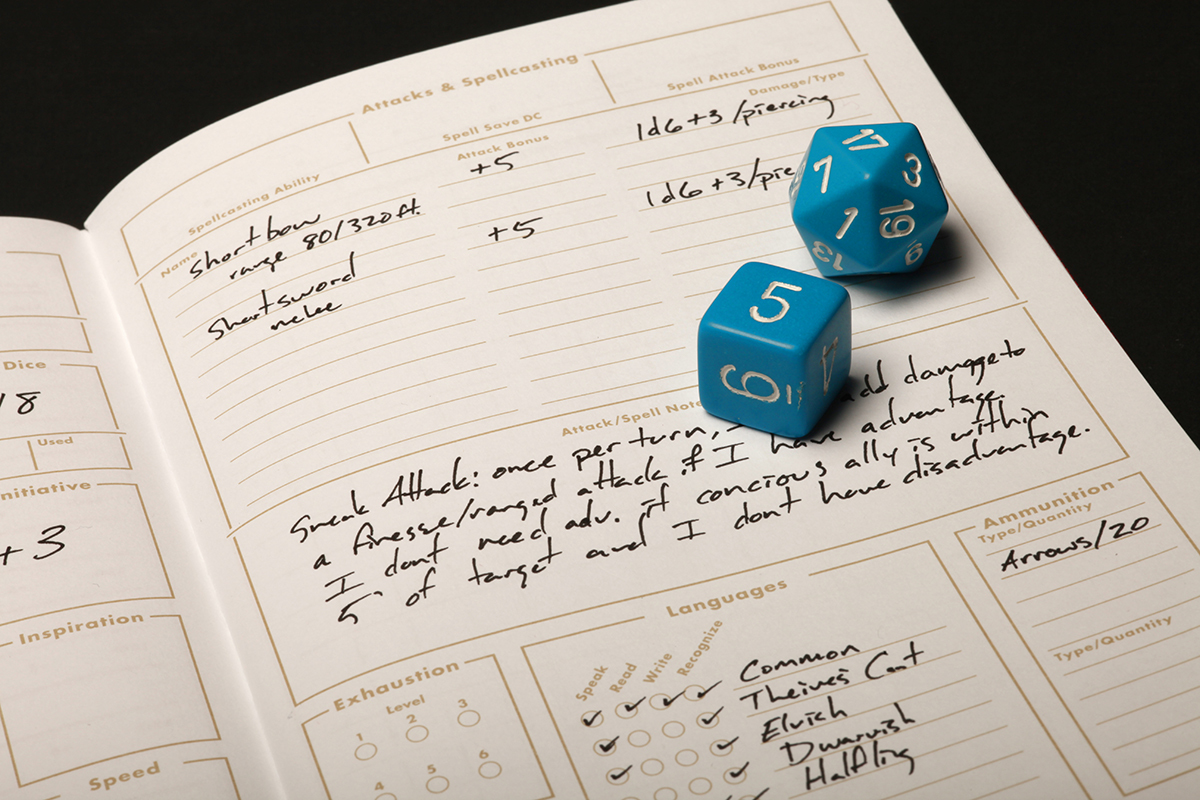
A few years ago, a friend of mine introduced me to the tabletop role-playing game Dungeons and Dragons. You might have heard of it once or twice, or even seen it portrayed in popular media, like on the Netflix show Stranger Things, where the kids play the game and even name some of the monsters that they fight from Hawkins Lab after monsters from the game.

I’m aware that writing this blog is pretty much exposing myself for the huge nerd that I am. Yes, this game is really nerdy. No argument that I can come up with is going to be able to change that fact. But what can I say? It’s also really fun. And I think that it has a lot of value besides just being a fun game.  

The thing that really drew me to the game was the idea that this is a collaborative story. To give you just a more specific look at how the game is played, one person is assigned as the GM (game master) and the other players (could be as little as one, or as many as…however many you want,) create characters that they roleplay as within the story. The GM will come up with the general outline of a story that he wants to tell and facilitate the rules and mechanics of the session, and the other players roleplay characters within that story, deciding together the details of what exactly happens, when, and why. These stories could be literally anything. The game itself is based in a fantasy setting, think Lord of the Rings, but at the end of the day, it’s really any story that you want it to be. Evil Sorcerer wants to resurrect an ancient evil force to destroy the world and the players have to stop him? Sure. Players want to stop a tyrant king Robin Hood style by stealing from aristocrats and giving it back to the poor? You bet. Want to try to steal a dragon’s stash of gold and end up having to fight it instead?

You get the point. When I say anything, I mean anything. This also goes for your characters. Want to be a sorcerer? Sure. War veteran? Got it. Assassin with a dark past? Okay, if you must.

And like I said, there are rules and structure to guide how you are able to act within the game. That part is fixed, you can’t just do ANYTHING you want. But in terms of narrative and story, that decision is shared between the GM and the players, and it truly is pretty much limitless.

Because stories take several sessions from start to finish, these roles are set in stone for a particular “campaign,” which is essential just a story. All of the players will meet up to play for a particular session, which is just like a chapter out of a book, and in that session, they will continue the story that they’ve been playing.

You’re probably wondering at this point why I’m writing this blog post and what does it have anything to do with our class? Well, a large portion of this classes discussion has been on literacy, the ways people use literacy to their advantage, the ways people acquire literacy, even questions surrounding what exactly is literacy? Another large portion I’d say has been on discussions surrounding the diversity of writing, and all the different forms that writing can take. Looking at these two topics together helps us to better understand both how literacy is acquired and used.

Because D&D is a game that is really limitless in possibilities, and while it has rules, mechanics that make the game function smoothly, the stories that you get to generate have no boundaries. You can do whatever your imagination comes up with, and that in my opinion is what makes the game so fun. You could play it hundreds of times and never do exactly the same thing, because you have the ability to come up with a different story every time that you play.

This got me thinking, could D&D possibly be a way for people to acquire/practice literacy skills? Further than that, does it have the potential for being a way to develop your own unique writing style and voice in an environment that is supportive? I’d like to say yes for both of those questions, and here is my reasoning why.

If you are the GM, that means that the general guideline of the story and where it should go is up to you. You plan out what exactly “could” happen in a given session, and this takes some work! In a game where anything can happen, and the players have an equal share in what could happen, you have to be prepared for things to go awry, and they will go awry. You won’t write down every possible scene, every possible dialogue line that will happen, every minute detail, but you will have to plan and have some things in mind. I current am the GM of a game for a group of friends, and I do a lot of writing of certain ideas that I have, and reading the ideas of others on the internet. This amounts to a lot of time spent reading and writing for the game behind the scenes, and the writing can be anything from short little notes, to fleshed out backstories of specific characters that you want to include. It’s as little or as much as you want, and this ability to be detailed and to write and read and prepare I think makes it an excellent means of collaborative storytelling. It’s like planning for a night of improv skits, only the actors sit at a table and tell stories in voices and description of actions.

The same kind of preparation goes for if you are a player. I’ve had friends write me really detailed character descriptions, and even sometimes send me short creative writing pieces about their characters to give a perspective of what they are like before we play. Some of these people that I’m personally friends with don’t really particularly like reading fiction, didn’t like English class, weren’t into theater, didn’t journal or write creatively at all, and the writing that they produced was honestly really good. You could hear that they had an investment in it and spent time on it. To them it really wasn’t labor intensive, it was just fun, and what they wrote was incredibly detailed and exciting.

During games, both the GM and the players have to roleplay as characters. That doesn’t mean you have to dress up as a warrior from the middle ages and run around in the woods pretending to fight monsters (although some people do actually do that, look it up, it’s called Live Action Role Playing) but it does mean that at certain points you’ll speak as your character, and you’ll tell the other players what your character wants to do in terms of action/reactions. Having conversations and creating a story on the fly is difficult to do, and people that are actors or are good at improvisatory acting excel at this. But for most people, it’s hard to talk and think like someone else! But it allows you someone to think of different ways to say things, or to think not how they would say it in that instance, but how someone else could or would. It’s an exercise in both building a narrative and conversation skills, something that I think helps to develop a style of storytelling, and can also be useful for those who want to build skills in literacy. Having improv like dialogue situations with friends allows you to learn I think in an environment that is judgement free.

At the end of all of this, you might think that you don’t want to make a story and roleplay in a fantasy world. And that’s fine, because there are so many other roleplaying games out there that are so similar to the premise of DND. I played a game once where you roleplayed characters in a randomly generated Cohen brother-esque scenario where everything goes horribly wrong. It was hilarious. And the same kind things I discussed before can apply here. The setting doesn’t matter, but the literacy building skills and story telling that occurs in these kinds of game do.

The point of this blog I suppose becomes a love letter to tabletop roleplaying games. They’ve brought me a lot of fun times with friends, and I think they can genuinely be a moment where literacy skills are developed and passionate, personal writing can occur. So if you love to write and to tell stories, consider looking into the game, maybe tell your friends. Who knows, you might have a really good time.

The Art of Cramming: Writing as a Finished Product

I REALLY liked the textbook “Bad Ideas About Writing.”

Maybe I’m just a huge nerd for this stuff, but I feel like this textbook is in a way a culmination of a lot of what we have been talking about all semester. Systemic issues that we have heard about or might have even experienced firsthand in writing are disseminated and discussed at length in brief, succinct essays. I have to say, and perhaps maybe it’s expected, it’s a textbook about writing, but the writing is really engaging and lively. Reading one of these chapters might be quick, but you will certainly be thinking about them long after you’ve finished, at least if you’re like me.

I was kind of surprised when I was scrolling through the table of contents to find a chapter that was entitled “THE MORE WRITING PROCESS, THE BETTER,” by Jimmy Butts. Now what struck me about this is that the all of the titles of the essays, as the title of the textbook states, state bad ideas about writing that the authors will discuss at length. I was surprised because I didn’t expect to see the writing process regarded as something that was bad about writing.

The writing process! You know, the thing that was drilled probably all the way back in middle school. Prewriting, drafting, editing, revising, publishing. I feel like I might have either missed or added a step there, but that’s generally how it goes right? Why would that process be a bad thing? Spending more time on your writing, thinking through these stages delicately and with care, reviewing over your work, it all leads to better, more refined writing, right? And I’ve heard time after time the idea that “writing is never finished,” this idea that we will never achieve the “ideal” for writing and that no matter how much we toil through draft after draft we will never reach the true pinnacle. Even though our work might be finished, it will never be truly “finished.”

As the semester is wrapping up and I once again feel inundated with papers and writing assignments, I start thinking about the writing process again, and how because these papers make up a majority of my grade, I should take time to make sure that I follow the writing process. Make drafts, revise, edit, and then submit after countless hours of work.

Well when finals roll around semester after semester I always am ambitious with myself. I try to come up with a day to day plan of what I’m going to accomplish with my writing in order to make finals time as smooth as possible. Sometimes its ambitious, but every time, I tell myself “stick to this plan, and this will be a breeze.”

Well, it usually doesn’t go according to plan. How it usually goes involves a good amount of procrastination, a dash of cramming, and not a lot of the “prewriting, editing, revising” kind of stuff. I’ll usually have to suffice with just a draft and a final revised copy that I send into my professors.

Is that a necessarily bad thing though? Okay sure, I’ll admit that pulling an all nighter and writing a final paper from scratch probably won’t turn out your best writing. However, I feel as though sometimes essays that I’ve been really pressed for time on and had to cram a bit have been some of my best work. I emphasize having to cram “a bit,” I think there definitely is a healthy amount of “cramming,” or pressure that college puts on that sometimes is healthy. Deadlines are good, they force us to produce work of substance in sometimes a limited time frame.

So I started to think, maybe it’s not what Butts intended, but can this idea of valuing the finished product more than the process itself be applied to situations where the writer does not have the liberty to spend as much time working through the writing process as thoroughly? We would typically assume that those situations result in writing that isn’t as well formed or produced, but is that always necessarily true, or just something that we have been taught and hold as true?

One line in particular that stood at to me speaking to this philosophy is when Butts writes “We cannot follow a writing process because writing is much messier than that.” Messiness reminds me a lot of finals time. My desk will be littered with old papers, books, small little writing sketches or drafts, maybe a mug or two from coffee or tea. My head also feels a bit messy, with ideas cluttered around, no time to think about a proper way to organize or set them aside, but they just exist there until the papers are done, until I’ve exhausted through all of them and picked the best ones, and then new ones appear. Writing is certainly a messy process, both metaphorically and literally.

Butts states that he is “worried that we are taking too much time to write. And time is our most important non-renewable resource.” Maybe it’s just because I’m starting to get older (I say that as if I’m an old man) but I really have started to think more than ever that time is precious. I believe that we should have those times where we rest, but overall, we should seize the day, especially with writing! There is so much to write about that we need to budget our time carefully, spend adequate time on our work but allow ourselves to experience life and live.

In the idea of living and time, Butts writes how “Time is a luxury. Revising too much can be unethical—a waste. There are diapers to be changed. More than that: People are dying. You are dying. And you need to write as though your next piece could be your last.”

Do I think that this rallying cry might be a little be melodramatic? A little bit. But just a little, because he does have a serious point. Lots of questions arise from this. Is the messiness that Butts talks about similar to the waste that he describes later? Can these two be reconciled, or at least opposites? Is there a point where writing without structure and focus becomes too messy and you sacrifice productivity and quality?

I certainly can’t address all of them in this blog, in part because I honestly don’t have the answers to all of them. I do believe that there is a tension, and there isn’t really a right answer to this just like there isn’t a right answer to writing. That might be a bit of a cop out, I admit, but in all honesty, I think in the end, Butts has a genuine point in that we should appreciate our finished products more. Saying that writing doesn’t ever have an end in a way discourages this. We should always strive to produce our best work, but I think respecting our finished products is part of what being human is about. We know we can write perfection, so let’s be happy with what we can produce right?

I encourage whoever is reading this blog to maybe give that chapter a reader if you have the time, and think about it, I’d be interested to see what you have to say about whether writing can be thought of like this without sacrificing anything. We are all students, or have been students at one point in our lives, and I’m sure we have all at least once had a moment where we had to cram a writing assignment in. How did it feel, how did your work turn out?

Google Map Places and Anti-Writing Spaces

When I came into class weeks ago to see our finished Literacy Narrative Map, my face honestly lit up. To see so many different, individual, and unique stories being shared in a classroom setting was an amazing sight to see, emphasized through the visual of the small little google map markers scattered across the globe like a clear starry night. It took me back honestly to my first-year writing class. The only assignment that we had for the whole semester was to write and workshop in class a 15 page + book where we would write about something that we were dying to tell the world. I say that it took me back though as if it was like 10 years ago. But I said this to my dad the other day. College moves so fast, but when I look back at all of the work that I’ve done over that short period of time, I honestly don’t know how I’ve done it/continue to do it.

I digress. I mention this class a lot when I talk about writing in University with other students and people, primarily because I think it was a really profound and enlightening experience for me of what writing could be, and it allowed me to intake a diverse variety of perspectives. People from all over the country, and even I think one student who was an international student, who had different lifestyles, different aspirations, hopes, dreams, stories to tell the world. And I had the privilege to both share my story with them, but more importantly I think was the privilege that I had to listen to and read their stories. It showed me just how diverse writing could be, and for that I’m thankful.

When I was writing my narratives, I felt like a lot of the work that I had done in first year writing translated. I had to think about things like audience, and developed a style of writing that was uniquely my own. While it was different in that I was doing creative writing in my other class, this was still in many ways an exercise in creativity. How could I convey my experiences in a way that was meaningful and concise?

My first set of my narratives gravitated towards thinking about the best memories that I had about writing. Most of them were from school settings, educators that had made a difference in my life, and spaces where I felt the most comfortable reading and writing. I think the good is oftentimes the easiest. When you are so passionate about reading and writing that it becomes a part of you, like it does for many of us, thinking about the times where writing isn’t occurring or is blocked in some way is oftentimes painful. When we started to talk about as a class the idea of writing about moments where writing wasn’t occurring after the first round of drafts, my mindset shifted a little bit. It took more out of me to recall those situations, and writing about them wasn’t easy.

But in a way, I think that working through these moments is necessary. When we think critically and write about these situations where writing could not occur, I think it proves the point that writing can still occur even after severe roadblocks and limitations. Even if someone individually, a group of people, ideological structures, or other means prevented you from writing in that moment, the very fact that you can write about that now serves as a testament to your ability to be a writer. No one can take that away from you try as they might. Our ability to think critically and reflect is something inherent to being human. And instances where we reflect on difficult moments gives us agency, it shows that ultimately, we get a say in whether or not we can write or be considered writers.

I’m fortunate enough that I don’t have many of these moments, however, I have had my challenges and struggles in my writing. Writing about them gave me the opportunity to realize my ability and become closer to what I truly love. It made me realize how important writing is just to getting closer to ourselves, and the potential that it has both to tell stories, and help us look back and remember. I’ve never been one to really journal on a regular basis, but now I think I understand just a bit of why so many people do that. There’s something very personal and empowering about putting thoughts to words on pages, and it makes me wonder about how the ability to write personally can still prevail despite the challenges individuals face.

The Roadblocks and Rewards of Interviewing

Interviews are hard!

I’d like to think that I’m a fairly sociable person. I’ve definitely gotten better at talking to people over the years. When I was a kid in elementary and middle school, I was terribly shy. This persisted even into High School, but I think I finally started to come into my own towards my junior and senior years. I have less anxiety talking to people now more than ever, and it’s something I actually enjoy a lot, whether that be deeper conversations to just shooting the breeze.

I entered this experience initially thinking that an interview would be just that, a conversation. Which, in a sense, is true, because an interview is a conversation. However, after reading sample literacy interviews in preparation for my own, and now thinking more on the topic after my own experiences, it’s safe to say that it’s a little more intricate than that. The interviewer has to prepare and provide questions that will be able to generate a discussion, and be open to having the interviewee take the conversation in a different direction, and realize when this might be more productive. It’s a much more productive form of conversation I would say, because the end result is to try and generate something that effectively relates an experience, answers a question, provides something more tangible in the form of dialogue.

I chose to interview my younger sister about her experiences with speech therapy during Kindergarten through 1st grade, and how these experiences affected her relationship with reading and writing both in the past and the present. My sister is 14 now, she’s a freshman in high school, and it was asking her to think back on experiences that happened about 10 years ago for her. It was surprising to me how much detail she could recall about those instances, but they say that the experiences you remember the most were the ones that affected you the most. I can’t really remember general details about 10 years ago, but certain events that were important to me I can still close my eyes, and it’s almost like I’m there again. Memory is a remarkable thing, and part of the reason I knew this was going to be worthwhile is because I knew these memories were important for my sister, that they needed to be shared.

Because my sister had never been interviewed before and I myself had never conducted and interview, we both decided it would be best If I provided her with the questions beforehand. I gave her about an hour to look it over, and then we began the interview. She was nursing a bit of a sore throat, and after asking her if she wanted to postpone it, she decided she was up for it after some tea. The interview began.

Looking back on it, the interview went really well, and having to type up the audio recording into a transcript made me realize this. In the moment though, I was really nervous, and felt that I maybe wasn’t providing enough direction for my sister, or that I wasn’t asking very good questions or follow up questions. In reality,

The most profound moment of the whole interview came at the very end, and it might not have happened had I not had the spur of the moment thought. At the end of the interview, I thought that I might have overcompensated from before, and steered my sister along too much, maybe not giving her as much opportunity to speak. So, in that moment, I thought to do just that. I asked her before I stopped the recording if she wanted to say anything that she wanted.

And say something she did. She spoke from the heart, talking about how all of her academic life has been hard and how she continues to struggle on a daily basis, but she works, and works, and works, to try and keep up with her peers. I had never seen this aspect of my sister before. I knew from watching her study for hours and hours in middle school that she worked hard, but sometimes you need to hear someone speak about things to know how difficult they really were. I stopped the recording, and there honestly wasn’t any words between us after that. I gathered my things, reassured her that it turned out great, and thanked her again.

This interview was enlightening in so many ways. It showed me just how much reform is needed in our education system, the immense amount of work that teachers do, the struggles of students who have learning disabilities and how their voices are often not heard by their teachers, how some people are just considered “not as good,” at certain subjects, like they will never be able to produce writing of substance. It left me wondering what comes next, what is there to be done? That I don’t think is a question that I think I can adequately answer in the span of this blog, but at the very least, the problems and struggles my sister faced became all the more present and real to me.

Interviews are hard, but what I’ve learnt is that sometimes spontaneity is key. You are interviewing someone because they have a story to tell, so let them tell it, even if that means letting go of direction or putting aside some questions that you once thought would be beneficial. When people have something that they are dying to tell, they will find the right words to let it be heard, no prompt necessary.

Threshold Concepts of Writing: The Audience

When it came time to choose a threshold concept to present for class, I skimmed briefly through the table of contents, trying to see if there would be anything to grab my attention. And almost immediately the chapter entitled “Writing Addresses, Invokes, and/or Creates Audiences” caught my idea. The idea of writing “creating an audience,” sounded pretty crazy to me. Just the very idea of “creating an audience,” seemed really abstract, and kind of cool. I was intrigued, so I figured that should be my threshold concept. I’m a sucker for good titles. From articles to books, anything that has a good title immediately grabs me. Last semester for one of my English classes we were assigned “Their Eyes Were Watching God.” It was one of the last books on the syllabus, and for the whole semester I was excited to read it. It just seemed so mysterious, like it was inviting closer inspection. It ended up being one of my favorite reads to date, for other reasons than the title. To cap off my rambling, I have an easier time getting into things that have good titles. Who says you can’t judge a book by its cover?

But what does it really mean though to “create an audience?”

That’s up for debate for sure, but what this piece tries to argue, is that whenever we write, we are writing for someone, or something. An assignment is for a teacher, an email is for coworkers. Even journal entries are for someone, in my opinion, that someone can be yourself. So therefore, all writing has an audience, and when we write, we in a sense get to “create” that audience.

Acknowledging that there are so many different ways to write, and so many different mediums, we quickly see how the possibility for writing becomes almost endless in this day and age. This means that more and more people than ever are able to write and share their ideas. They are able to engage in this process of create audiences in new and exciting ways.

This idea personally resonates with me because I’m a huge proponent of advocating for writers to find their own voices and think outside the box when they write. In fact, I get to do that pretty frequently at the Writing Center here at St. John’s. Working at the Writing Center, one of the philosophies that we preach is that want to help students and individuals to realize that anyone has the agency to write. We are in an age where thankfully, more and more people are able to get their voices heard than ever before in a very public way. Blogs, social media, forums. The internet has been a great blessing for allowing people to share writing, to connect with others in meaningful ways, to exchange ideas.

In many ways, it’s also been a curse.

My friend at Adelphi University wrote a paper on the effects of groupthink on social media sites and internet forums, particularly the site Reddit. Unfortunately, I wasn’t able to get the paper to talk about it in more detail, but the main argument of his paper was that on sites like Reddit, where comments and replies are able to be “voted” on by other users, pushing them further to the top of a thread, it may lead groupthink amongst users. This had led to a lot of forums on Reddit in particular concealing the upvote or downvote counter from the viewers, in an attempt to create a less biased experience. The fact still remains that groupthink is a power way for misinformation to be spread, and for biased/hate speech to run rampant. Even comments and responses are writing, and we are authors when we respond. Its yet another opportunity for us to be thinking about audience and take that into consideration as we write.

In this day and age, we also might not have the opportunity to fashion our audiences exactly how we want them to be, in the sense that at least on the internet, practically anyone can read what you write. While we might not get a choice in who exactly reads what we write today, we still have control over consciously thinking about audience in our writing process, and letting those considerations shape our intentions as we write.

The point of it all at least to me is this: we have more tools and opportunities than ever before to write, and to have our writing be seen by the world. It’s remarkable, and I wouldn’t want to be alive in any other time than now. But with great power comes great responsibility. We need to be more conscious than ever when we write, and choose to write responsibly, to always be thinking about audience and to understand that our audiences now more than ever will be a much more diverse body of individuals. We must consciously choose to interact with them in meaningful ways and fulfill our obligation to be good authors.

Lost in Translation

Je suis en tren d’apprendre le français. J’ai commencé apprendre le langue il y a un an.

I had to take 6 credits of a language in order to fulfill the requirement in order to graduate. I took Spanish in High School, and I liked it, but I wanted to try something else. I decided to take French instead. But I had no idea how much I’d grow to love this language and just the process of learning a language in general.

C’est difficile de temps en temps, mais j’ai travaillé très dur, et ça montre.

I hope to be fluent one day, and am doing everything that I can to make that a reality. I read as much as I can. Sometimes I’ll try my hand at very basic literature, despite it being really challenging most of the time. I’ll listen to music, watch TV, every little bit helps in the long run I suppose.

A few weeks ago I passed my first milestone in that I did some (not all, we aren’t nearly there yet) of a formal paper assignment completely in French. It ended up being one of the most humbling experiences of my life.

I’m an English major, and so I pride myself on having an above average command of language. I can write lengthy detailed sentences, imply meaning through metaphors and similes, use the language in unconscious ways. I don’t have to consciously think about the grammar in what I’m writing, at least not for the 99% of what I write. I just write, and with good preparation and revision, I’m proud of what I write.

In French on the other hand, I’m restricted to the verb tenses that I knew (at that time a whopping 4 compared to the dozens that we use unconsciously in English,) and the handful of vocabulary that I’ve learned. Imagine writing a paper, and every time that you come to a verb, you need to do the mental work required to make sure that it is in the proper tense. Then you start to wonder if you’re even using that verb properly. Just because something is used in that context in English, doesn’t mean that it will be used the same in another language.

This paper more than anything opened my eyes to how translation affects the way we learn and understand a language, and how sometimes it can actually be harmful. Once you reach a certain point, I feel as though it’s important to not think of a language that you are trying to learn as a translation of English (assuming you are a native speaker of English,) but as a living, breathing language all its own, with its own idiosyncrasies, grammar rules, figures of speech, etc. For example, the saying “to bite the bullet” could be literally translated to French probably, but then the metaphorical meaning it had in English is lost. Same as if you were to translate the saying “Ça marche!” to English. Literally it means “it walks,” but in French its more along the lines of “that’s fine.”

The experience also opened my eyes more to the struggles that ELL students or any individual that is attempting to learn a foreign language goes through, the frustration of being able to communicate so well and vividly in your native tongue, and the sudden inability to do that. I would in no way compare my experience to an ELL; the struggles that they face immersed in an English-speaking society are far more severe than me writing a paper in French in the safety of an English-speaking society. There is far less risk for me, and that’s important to acknowledge. I mainly write about this aspect because I hope to one day be an educator. Understanding just how difficult it is to learn a language is crucial in being able to emphathize and help individuals. You begin to realize what we take for granted in terms of

I’m still waiting to see what the grade for it will be, but regardless, I feel really accomplished just because I was able to do it. Grade aside, I know that this was something I worked really hard for, and its opened my eyes to thinking about both French, and English, in a different light. Which is what college is all about right? Learning new things and rethinking what we thought we already knew.

That and trying to survive midterms.

Asao Inoue’s Address at CCCC

Asao B. Inoue is a writer, educator, scholar, currently administrator at the University of Arizona. If his name sounds familiar, it’s because we read a piece of his work earlier in the semester, part of his book on labor based grading and labor logs. As a consultant at the Writing Center at St. John’s, part of my staff education has been to familiarize myself with Inoue’s work beyond just the realm of labor grading. We (St. John’s Writing Center,) are actually, in association with a few other departments at St. John’s, going to be hosting Inoue in about a month’s time to have an open discussion with him about the ways that we can promote inclusivity on campus through writing, (very exciting!) Part of preparing for that visit was watching this speech that Inoue gave at CCCC (Conference on College Composition and Communication), or 4Cs for short, an annual national convention where, as you can probably guess, scholars, educators, administrators gather to discuss composition and communication.

Standing before a crowd of fellow educators, administrators, and writing scholars of all different backgrounds, Dr. Inoue gave a speech that aggressively challenged the standards of writing that have been upheld for centuries. This was a speech that challenged the status quo in a really radical way, and has been a topic of debate ever since it was given about a year ago. He calls the standards of writing that we have established inherently racist, white supremacist, in that they serve only to promote one particular way of writing and speaking, and to reject any other forms of writing as having rhetorical merit or value. These are words that would shock many, and for good reason, as they are words that hold a lot of gravity to them. To call an individual, or a system, or a group “racist,” is to accuse them of acting in a way that does violence to another group of individuals. It’s extends beyond the level of thought in that racism is seen in actions as well. To call the way we write and educate something that is inherently racist is not something to be done lightly. But Dr. Inoue uses these terms unapologetically, and with a rhetorical bravado that encapsulated me.   

A few minutes into his speech, he recites part of a poem by Maya Angelou entitled “Caged Bird” a work whose poetic subject, the caged bird, is a reference to the poetic subject of Dunbar’s poem “Sympathy.” He reads the poem with the purpose of reflecting on how white language supremacy has created a metaphorical cage for those who do not conform to a white standard of English. Upon finishing, he asks his colleagues of color in the audience.

“Who has been allowed to name people, places, things, the processes of writing and revision, the theories of rhetoric. Who has named your sky? Who has named your writing, my friends.”

“Who has named your sky.”

The delivery of this line hit me. It’s a microcosm of Inoue’s unapologetic critique of the way that we educate, write, communicate. For millions of individuals, our current standard of English has determined success, and oftentimes failure in countless ways for individuals who cannot, and should not, be forced to conform.

At first Inoue’s speech shook quite me a bit, and I’m grateful for it. It made me think long and hard, which I believe is one of the signs of a good speech. It forces you to look at yourself, and the world around you critically, and every word is meaningful, something to be savored. As someone who comes from a white, middle class background, and who wants to become an educator, I’m grateful for having heard this speech, especially the moment where Inoue addresses his white colleagues in the audience, asking,

“How does it feel to be the one in the way of progress? You are good people, and yet, you are the problem…Think about that for a minute. You can be a problem, even when you try not to be. Sit and lament in your discomfort. If our goal is a socially just world, we don’t need more good people. We need good changes, good structures, good work, that makes good changes and structures and people.”

If I am to be an educator and to be white, and to not take action against ways our standard of language us unfair, and racist, and biased, then I am being complicit, and that is just as bad as those who actively seek to oppress. Being a good person comes from good action, not good thoughts. Actions speak louder than words.

If you have 45 minutes, which unfortunately for a lot of us is a luxury, I urge you to watch this speech, and to earnestly listen. It’s a message that I think everyone should hear, because while the speech only last 45 minutes, I’ve been thinking about it for a lot longer than that, and perhaps you will too.

Link to the address: https://www.youtube.com/watch?v=brPGTewcDYY&t=828s

A Timeline of Writing

My expectations for the first day of my Teaching of Writing class were immediately shattered with the reality of several ice breaker exercises in which I got to talk to several of my new classmates. I learned a few names, and even met someone who was from the same town as me (it’s a small world after all!) But the most surprising moment was when large white pieces of paper began to be passed around the room. I dreaded what would come next. I figured this was going to be some kind of artistic assignment, my suspicions confirmed when Dr. Geller produced several boxes of crayons and colored markers. My heart sank. The assignment was to come up with a timeline of the history of writing in our lives. This could be anything, from experiences we had in school, at home, with friends, at any time in our lives. I really do not like to draw, predominantly because I’m not very good at it. Writers block (or I suppose artists block in this case,) ensued immediately. I felt nervous and shy, and didn’t particularly want to open up in front of a room of total strangers . But this trepidation slowly made way to a steady stream of ideas. Before I first put marker to paper, I vowed to myself to just draw, not judge what I would produce, and after a few minutes, I created the timeline you see above.

For me, writing has always been closely linked to reading. Teachers have always had a big impact on me, and I’ve been very fortunate to have several English teachers who have stood as role models to me throughout my years growing up. In middle school, I had a teacher who pushed us as a class when it came to English. We grappled with texts that looking back, were quite challenging. But I loved every second of it, and really threw myself into the work. I was told by this teacher to “never stop writing,” and it really made an impression on me. I never forgot this, and years later, I feel like I’ve honored their request.

High school left me very uncertain as to what I wanted to do with my life and where I wanted to go. I enjoyed my time at high school, made a lot of friends, read a lot, but there was always that looming uncertainty. I could see myself being happy doing a lot of different things, and I didn’t really have as much guidance as I would have liked. I enrolled at St. John’s University as an English major, with the idea that I would be studying something that I loved, and I’d find my way in terms of career along the way.

In my freshman semester I was lucky enough to have a First Year Writing class with Professor Roseanne Gatto. In the class, we were tasked with writing an assignment, 15 single spaced pages on an event in our lives that is important to us. We got to workshop parts of our papers in class, and through this, I got to hear the stories of so many different people. Happy stories, sad ones, ones of triumph, and of grief. It is one of the most memorable experiences I’ve had in school, and it is part of the reason I am where I am today.

Being an English major as I’ve drawn is a lot of reading and writing and writing and reading and reading and writing…you get the picture. But amongst all of that, there is the opportunity to find your voice, express yourself, interact with and learn from really creative people every day, and tackle real world issue and think critically about the ways that we think, live, and interact with each other.

Looking back on my timeline, I perhaps shouldn’t have placed an end marker on it. My life in terms of writing is still being written, and I hope that this class will help me extend this timeline even further, and add some new things along the way.

Design a site like this with WordPress.com
Get started