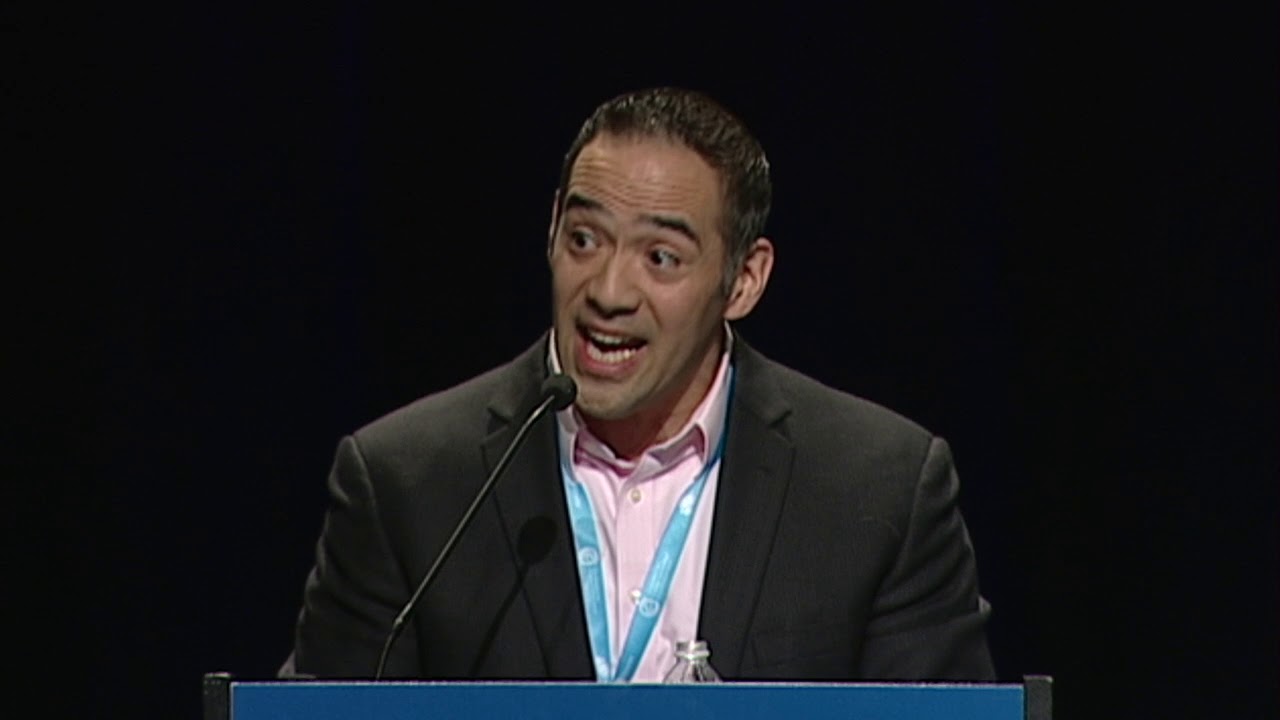
Asao B. Inoue is a writer, educator, scholar, currently administrator at the University of Arizona. If his name sounds familiar, it’s because we read a piece of his work earlier in the semester, part of his book on labor based grading and labor logs. As a consultant at the Writing Center at St. John’s, part of my staff education has been to familiarize myself with Inoue’s work beyond just the realm of labor grading. We (St. John’s Writing Center,) are actually, in association with a few other departments at St. John’s, going to be hosting Inoue in about a month’s time to have an open discussion with him about the ways that we can promote inclusivity on campus through writing, (very exciting!) Part of preparing for that visit was watching this speech that Inoue gave at CCCC (Conference on College Composition and Communication), or 4Cs for short, an annual national convention where, as you can probably guess, scholars, educators, administrators gather to discuss composition and communication.
Standing before a crowd of fellow educators, administrators, and writing scholars of all different backgrounds, Dr. Inoue gave a speech that aggressively challenged the standards of writing that have been upheld for centuries. This was a speech that challenged the status quo in a really radical way, and has been a topic of debate ever since it was given about a year ago. He calls the standards of writing that we have established inherently racist, white supremacist, in that they serve only to promote one particular way of writing and speaking, and to reject any other forms of writing as having rhetorical merit or value. These are words that would shock many, and for good reason, as they are words that hold a lot of gravity to them. To call an individual, or a system, or a group “racist,” is to accuse them of acting in a way that does violence to another group of individuals. It’s extends beyond the level of thought in that racism is seen in actions as well. To call the way we write and educate something that is inherently racist is not something to be done lightly. But Dr. Inoue uses these terms unapologetically, and with a rhetorical bravado that encapsulated me.
A few minutes into his speech, he recites part of a poem by Maya Angelou entitled “Caged Bird” a work whose poetic subject, the caged bird, is a reference to the poetic subject of Dunbar’s poem “Sympathy.” He reads the poem with the purpose of reflecting on how white language supremacy has created a metaphorical cage for those who do not conform to a white standard of English. Upon finishing, he asks his colleagues of color in the audience.
“Who has been allowed to name people, places, things, the processes of writing and revision, the theories of rhetoric. Who has named your sky? Who has named your writing, my friends.”
“Who has named your sky.”
The delivery of this line hit me. It’s a microcosm of Inoue’s unapologetic critique of the way that we educate, write, communicate. For millions of individuals, our current standard of English has determined success, and oftentimes failure in countless ways for individuals who cannot, and should not, be forced to conform.
At first Inoue’s speech shook quite me a bit, and I’m grateful for it. It made me think long and hard, which I believe is one of the signs of a good speech. It forces you to look at yourself, and the world around you critically, and every word is meaningful, something to be savored. As someone who comes from a white, middle class background, and who wants to become an educator, I’m grateful for having heard this speech, especially the moment where Inoue addresses his white colleagues in the audience, asking,
“How does it feel to be the one in the way of progress? You are good people, and yet, you are the problem…Think about that for a minute. You can be a problem, even when you try not to be. Sit and lament in your discomfort. If our goal is a socially just world, we don’t need more good people. We need good changes, good structures, good work, that makes good changes and structures and people.”
If I am to be an educator and to be white, and to not take action against ways our standard of language us unfair, and racist, and biased, then I am being complicit, and that is just as bad as those who actively seek to oppress. Being a good person comes from good action, not good thoughts. Actions speak louder than words.
If you have 45 minutes, which unfortunately for a lot of us is a luxury, I urge you to watch this speech, and to earnestly listen. It’s a message that I think everyone should hear, because while the speech only last 45 minutes, I’ve been thinking about it for a lot longer than that, and perhaps you will too.
Link to the address: https://www.youtube.com/watch?v=brPGTewcDYY&t=828s
 Tom Talks (and Learns) About Writing